
The Commerce Ministry is set to unveil the annual review of the Foreign Trade Policy on April 11. It would not be exports alone which would be the focus, but steps to ease imports are also likely to give a boost to supply of essential commodities.The government is facing political pressure from many quarters, including the Left parties, to check the rising prices within a couple of weeks.
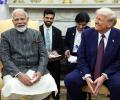
"Their Prime Minister just visited -- he's a great friend -- but I told him, 'You're not treating us right. You charge us 52%, while for years, decades even, we've c'harged you next to nothing. It wasn't until seven years ago, when I took office, that we started pushing back, beginning with China.'"

The government is targeting export of goods and services worth $2 trillion by 2030.

Jaishankar said that the Pahalgam attack "was an act of economic warfare. It was meant to destroy tourism in Kashmir, which was the mainstay of the economy. It was also meant to provoke religious violence because people were asked to identify their faith before they were killed."

Trade links with Israel have strengthened in the past few years, even as the value of goods exchanged with Iran has diminished. Iran accounted for $3.9 billion worth of India's exports in the four quarters ending December 2019, compared to $3.6 billion to Israel. However, India's exports to Iran dropped to $1.2 billion as of December 2023, on a rolling four-quarter basis, while exports to Israel grew to $6.1 billion in the same period.

External Affairs Minister S Jaishankar has asserted that India has zero tolerance for terrorism and will never give in to nuclear blackmail, emphasizing that New Delhi will deal with Pakistan purely bilaterally. He made these remarks during a joint press conference with his German counterpart in Berlin, where he also highlighted the importance of the strategic partnership between India and Germany, emphasizing the need for a free trade agreement between the two nations.

Global brokerage firm CLSA has reversed its early tactical shift from Indian equities to Chinese stocks, and has decided to raise India allocation while cutting exposure to China. In its report titled 'Pouncing Tiger, Prevaricating Dragon', CLSA cited challenges facing Chinese markets in the aftermath of Donald Trump's victory in the US elections as the reason for the move. "Misfortune can happen in threes. So it has played out for Chinese equities over the past week.

'We need to be very vigilant as we are passing through some fraught times.'

E-commerce firms and sellers including Amazon and eBay have made recommendations to the government for a differentiated policy framework for e-commerce in the revised Foreign Trade Policy (FTP) which is expected to come into effect from April 1, 2021. This is because the existing policies on exports have catered largely to traditional, offline and business-to-business exports. Suggestions have been made to the government that through the FTP, it is important to create a conducive policy framework for e-commerce exports that lowers the entry barrier for small businesses to start exporting, according to the industry sources.

A statement issued by State Department Spokesperson Tammy Bruce said Landau "reaffirmed the United States' strong support of India in the fight against terrorism and the strategic partnership between the two countries".
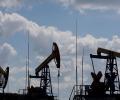
The government has no say in where the country's refiners source oil from because these are commercial transactions.

'Entering India is exciting, but it's also challenging. You have to be prepared for long-term investment.'
There is no reason to worry. We have exceeded our expectations. When we announced the FTP in 2004, our exports were at $63 billion. Today (in 2007-08), they have crossed $155 billion.

'The background for the Saudi-Pakistan agreement is the fact that the regional security order has collapsed due to the Israeli attack on Doha.' 'The Americans have largely abandoned their security guarantee for West Asia and the region has no choice but to look at alternatives.'

The Global Times, a prominent state-run Chinese media outlet, published an article titled "China and India are cooperation partners, not rivals: Xi," highlighting President Xi Jinping's remarks about the bilateral meeting, saying, "as long as the two countries stick to this overarching direction, China-India relations can sustain steady and long-term growth."

Industry players said the sharp sell-off in February forced many companies to put off their listing plans

In an eventful week ahead, stock markets may face volatile trends before the RBI's interest rate decision and the US inflation data announcements, as investors continue to assess the broader implications of US tariffs on global economy and inflation, analysts said. Investors fear that a full-blown trade war will impact global trade and economic growth, according to market experts.

From the Sensex pack, Tata Steel, Zomato, Power Grid, UltraTech Cement, IndusInd Bank, Larsen & Toubro, Adani Ports, NTPC, State Bank of India and Reliance Industries were among the major gainers. On the other hand, Tech Mahindra, Tata Consultancy Services, ITC, Infosys, Sun Pharma, Maruti, HCL Tech, and Nestle were among the laggards.

The top 20 fund houses held 6.8 per cent of their portfolios in cash as of May 31, down from a record high of 7.2 per cent in April 2025.

'Geopolitics will be the most important driver of financial markets in 2025.'

From the Sensex pack, Bajaj Finserv, Mahindra & Mahindra, Axis Bank, Bajaj Finance, Adani Ports, ICICI Bank, Zomato and UltraTech Cement were among the biggest gainers. However, ITC, Nestle, State Bank of India, Reliance Industries, Asian Paints and Tata Consultancy Services were among the laggards.

India is preparing to resume the Kailash Mansarovar Yatra, a pilgrimage to Mount Kailash in Tibet, after a three-year hiatus. The decision comes as part of efforts to improve relations between India and China, which have been strained since a military standoff in 2020. The two countries have also agreed in principle to resume flight services between them.

Among Sensex shares, Mahindra & Mahindra, Bharti Airtel, Bajaj Finance, Zomato, Nestle, Bajaj Finserv, Maruti and Titan were the biggest gainers. Sun Pharma, Power Grid, Tata Consultancy Services, Tech Mahindra, Asian Paints and Tata Motors were among the laggards.
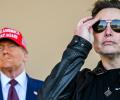
United States President-elect Donald Trump's plan to overhaul the government with a new department headed by tech billionaire Elon Musk and Indian-origin entrepreneur Vivek Ramaswamy will be a biggest threat for China as it has to compete with far more efficient US political system, a policy advisor to the Chinese government said.

From the Sensex firms, Eternal, Mahindra & Mahindra, Maruti, Bajaj Finance, Tata Steel, Bharti Airtel, Bajaj Finserv, Asian Paints, Power Grid and State Bank of India were among the laggards. Kotak Mahindra Bank, Axis Bank, Titan, HCL Tech, Tata Motors, Infosys and Tata Consultancy Services were the gainers.

LIC said USTR's views are based on an incomplete understanding of Indian insurance regulation and LIC's functioning.

Among Sensex scrips, Bharti Airtel, Titan, NTPC, State Bank of India, ITC, Tata Steel, Mahindra & Mahindra and Tata Motors were the major laggards. Adani Ports, Infosys, Axis Bank, HCL Technologies, Tech Mahindra and IndusInd Bank were among the gainers.
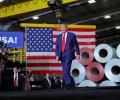
India maintains "high" import duties on a wide range of American goods such as agricultural items, drug formulations, and alcoholic beverages, besides imposing non-tariif barriers, a US report has said. A day before announcing reciprocal tariffs, the US Trade Representative (USTR) released the 2025 National Trade Estimate (NTE) Report on March 31.
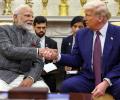
Trump went on to say that "I'm using trade to settle scores and to make peace."

Corporate earnings from blue-chips like HDFC Bank, ICICI Bank, Donald Trump's swearing-in as the US President, and trading activity of foreign investors are the key factors to drive equity markets this week, analysts said. Trump will be sworn in as the US president for a second term on Monday. This week, several key Nifty-50 companies, including BPCL, HDFC Bank, Hindustan Unilever, Dr Reddy's, UltraTech Cement, JSW Steel and ICICI Bank are scheduled to announce their financial results.

'Foreign policy-making cannot be shifted out of Delhi and the regional satraps, who do not have a national perspective, should not be allowed to dominate foreign policy. But regional inputs should be integral to foreign policy-making at every step of the way,' says Ambassador T P Sreenivasan.
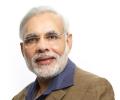
The major driver of Mod's foreign policy can be gauged from his economic priorities such as creating employment opportunities for the youth bulge. Related to this is emphasis on manufacturing, and infrastructure development, which in turn raises the issue of FDI. He has already articulated his views on all these issues, says Rup Narayan Das.

The resilience of the economy and strength of domestic demand will continue to make India an engine of growth amid the rapidly evolving global trade landscape as a result of US tariffs, Finance Minister Nirmala Sitharaman said in London on Tuesday.

The story of the Bombay Stock Exchange and the people who shaped its growth: From wars and bomb blasts to speculators, reformers and wealth creators.

The ministry of external affairs also seemed to reject Trump's forceful comments that Washington brokered the understanding between India and Pakistan on ending their four-day military conflict.

The Congress party launched a scathing attack on the central government regarding the Pahalgam terror attack and Operation Sindoor, demanding accountability from Home Minister Amit Shah and clarification on the number of Indian jets downed during the operation.

State Bank of India, Tech Mahindra, Larsen & Toubro, Tata Steel, Sun Pharma, Infosys, HCL Tech, Axis Bank, Tata Consultancy Services and NTPC were among the biggest laggards among Sensex shares. Nestle, Hindustan Unilever, Titan, Power Grid, UltraTech Cement and ITC were among the gainers.

'For the Indian economy to maintain a growth rate of 7 to 8 per cent, it needs large foreign direct investment coming in, and that's mainly coming from the US.'

'Market corrections are a natural part of investing, so it's essential to remain focused on long-term financial goals.'
